Private Label Mattress Manufacturer Guide: 9 Steps to Launch Your Brand
Working with a private label mattress manufacturer is the fastest way to launch a mattress brand without building a factory. You bring the brand, the customer and the product vision; the manufacturer brings the production lines, materials and know-how. This guide walks through the process step by step, so you know what to decide, what to ask, and where new brands usually lose time and money.
What a Private Label Mattress Manufacturer Does
A private label mattress manufacturer produces mattresses that are sold under your brand name. Typically the factory offers a set of proven constructions, such as pocket spring, hybrid, foam or bonnell, and adapts them to your requirements: comfort layers, firmness, cover fabric, sizes, labels and packaging. You own the brand, set the price and sell to the customer.
The appeal for new brands is speed and lower risk. Instead of developing a mattress from a blank page, you start from a construction that is already in production, already tested and already shipping, then make it your own.
White Label vs Private Label vs OEM vs ODM
These terms are often used loosely, so agree on definitions with each manufacturer. As a rule of thumb:
| Model | What you control | Speed to market | Best for |
|---|---|---|---|
| White label | Logo, labels, packaging | Fastest | Testing a market or adding a range quickly |
| Private label | Comfort layers, firmness, cover, sizes, packaging | Fast | New brands that want a distinct product on a proven base |
| OEM | Full specification you provide | Medium | Brands with an existing design or technical team |
| ODM | Product brief; factory develops the design | Slowest | Brands needing a new construction without in-house R&D |
Most first-time brands land on private label: enough customization to stand out, without the time and testing cost of a brand-new construction. You can move toward OEM or ODM later as volumes and confidence grow.
The 9-Step Private Label Mattress Process
1. Define Your Customer and Price Point
Start with who you sell to and where: direct-to-consumer online, furniture retail, hospitality or a marketplace. Channel drives almost every later decision. An e-commerce brand needs a mattress that roll-packs well and survives parcel delivery; a retail range needs a showroom look and a clear step-up between models. Fix a target retail price, then work backwards to a landed cost you can afford.
2. Choose Your Construction
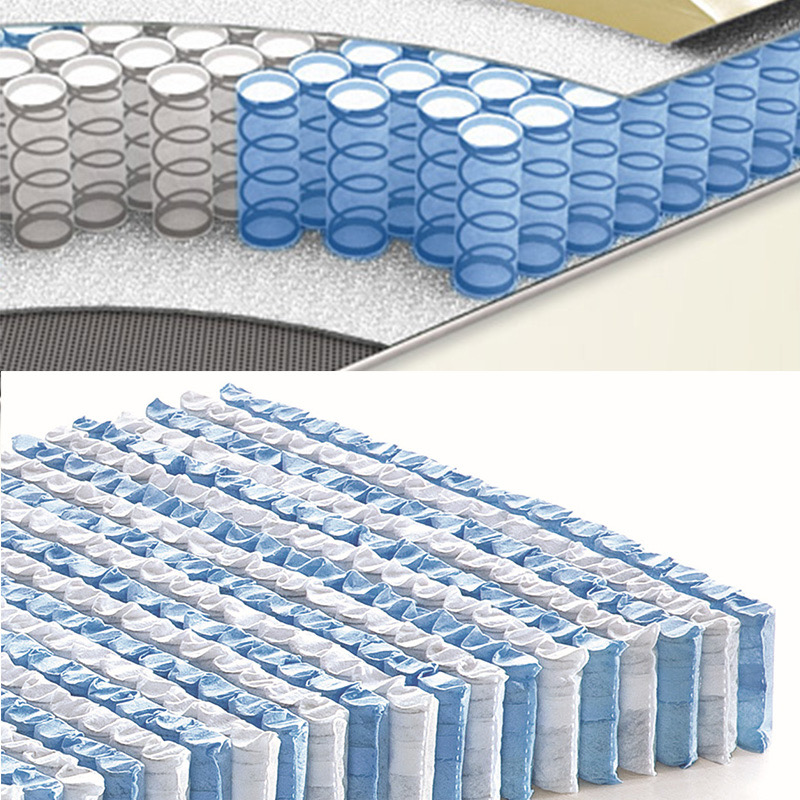
Decide what sits at the core of your line. Pocket spring and hybrid mattresses dominate the mid and upper market because individually wrapped coils give support and reduce motion transfer. All-foam mattresses are lighter and compress easily. Bonnell spring is a cost-effective option for value ranges and guest beds.
If you are new to spring systems, read our explainer on pocket spring mattresses (in Indonesian) or ask your manufacturer for cutaway samples.
3. Write a Specification Brief
A written brief is what turns “something like that mattress” into a product a factory can quote and reproduce. List sizes, profile height, spring type, comfort layers, firmness target, cover fabric, packaging and expected volumes. Send the same brief to every manufacturer you contact so you can compare quotations line by line. Use the checklist further down this page as a starting point.
4. Shortlist Private Label Mattress Manufacturers
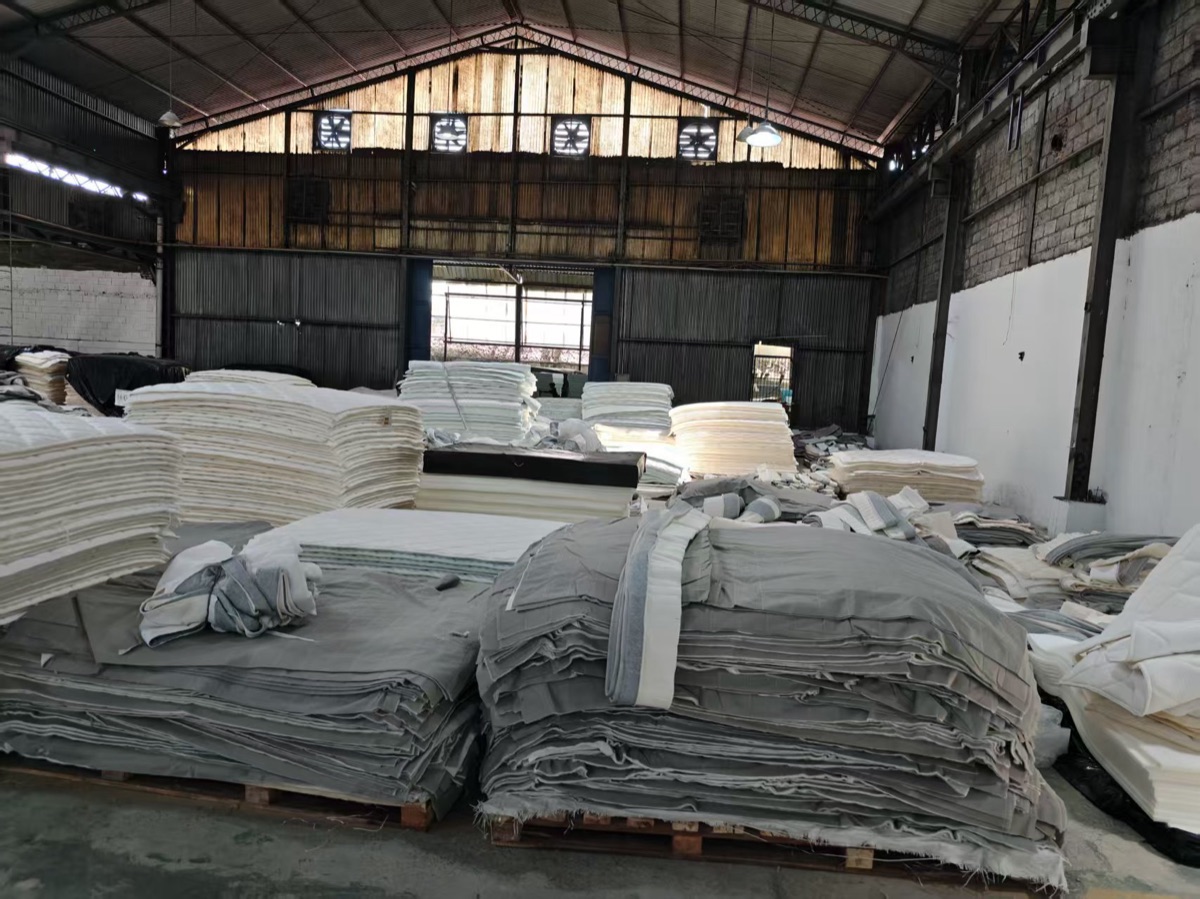
Look for a manufacturer that already produces your construction at scale, makes its key components (especially spring units) in-house, and has shipped to your market before. Ask which brands they produce for and request factory photos or a video call. Our 10-point mattress supplier checklist covers what to ask in detail.
5. Sample, Test and Sign Off
Expect more than one sampling round. Sleep on the samples, have other people try them, and check dimensions, firmness and finishing. When a sample is right, sign off a written specification that lists every material and measurement, and keep an approved “golden sample” at both ends. Mass production is then checked against that sample, not against memory.

6. Plan Compliance for Your Market
Compliance is the brand’s responsibility, so plan it before you order. For the United States, mattresses must meet the federal flammability standards 16 CFR 1632 (cigarette ignition) and 16 CFR 1633 (open flame), and carry the required labels. Some states add their own labeling or registration rules. Ask your manufacturer for current test reports on the construction you chose and confirm the requirements with a compliance consultant or testing lab.
7. Design Labels, Covers and Packaging
This is where a private label mattress becomes your brand: cover fabric and color, border design, woven or printed logo labels, law labels, the compressed roll bag, the box and the insert card. Get artwork dimensions from the factory early, because printed cartons and custom fabrics often take the longest to source. Make sure the box is sized for your shipping method and marketplace rules.
8. Place the First Order and Inspect
Agree on price, payment terms, Incoterms, lead time and how defects are handled, in writing. For the first order, book a pre-shipment inspection against an agreed acceptable quality level (AQL): check measurements, labels, stitching, compression and carton marks. Fixing a problem in the factory is far cheaper than fixing it in your warehouse.
9. Ship, Launch and Plan Reorders
Roll-packed mattresses fit many more units per container than flat mattresses, which lowers freight cost per piece. Work with a freight forwarder and customs broker on documents and duties for your destination. After launch, share customer feedback and return reasons with your manufacturer, and agree a reorder rhythm so you are not caught out of stock in peak season.
Specification Brief Checklist
Include at least the following in the brief you send to manufacturers:
- Market and channel: country, online or retail, target retail price
- Sizes: standard sizes for your market (e.g. US Twin, Full, Queen, King) or custom dimensions
- Profile height and overall construction (pocket spring, hybrid, foam, bonnell)
- Spring unit: type, zoning, edge support preference
- Comfort layers: foam types and thicknesses, memory foam or latex if required
- Firmness target and a reference mattress if you have one
- Cover: knit or woven fabric, color, quilting pattern, border design, zipper or not
- Branding: logo labels, law labels, handles, care tags
- Packaging: roll-packed or flat, bag, box dimensions and print
- Compliance: standards and test reports required for your market
- Volumes: first order quantity and estimated annual volume per size
Common Mistakes New Mattress Brands Make
- Choosing on unit price alone instead of landed cost and quality
- Approving production without a signed specification and golden sample
- Leaving compliance testing and law labels until after the order
- Launching too many models and sizes before demand is proven
- Designing a box that is too large for parcel carriers or marketplace limits
If you are weighing where to manufacture, our guide to sourcing mattresses from Indonesia covers logistics and planning for US brands, or see how DMM works as a mattress supplier for private label brands.
Frequently Asked Questions
- What is a private label mattress?
- A private label mattress is made by a manufacturer and sold under your brand. You choose or adapt the construction, cover, labels and packaging; the factory handles production. You own the brand and the customer relationship.
- What is the difference between white label and private label mattresses?
- White label usually means an existing factory model with only your logo and packaging added. Private label goes further: you adjust materials, firmness, cover design or sizes so the product is distinct to your brand, while still building on a proven construction.
- Do I need my own mattress design to start a private label brand?
- No. Most new brands start from a manufacturer’s existing construction and customize the comfort layers, cover and packaging. Developing a completely new construction (ODM or full OEM) takes longer and requires more sampling and testing.
- What is the minimum order for a private label mattress?
- Minimum order quantities differ by manufacturer, construction and how much you customize. Custom fabrics and printed packaging often have their own minimums. Ask each manufacturer for MOQs against your specification so quotations are comparable.
- Who is responsible for mattress compliance testing?
- In the United States, the brand or importer is responsible for making sure mattresses meet federal flammability standards (16 CFR 1632 and 1633) and labeling rules. A good manufacturer supports this with test reports and prototype records, but confirm the details with your compliance advisor.
Launching a Private Label Mattress?
DMM Mattress produces private label pocket spring, hybrid and foam mattresses in Indonesia, with our own spring production and 20+ years of experience. Send us your brief and we will help you turn it into a specification.